AI for Inventors · October 1, 2026
How Inventors Find the Right Company to License a Product
By Suzi Murphy, InventMentors
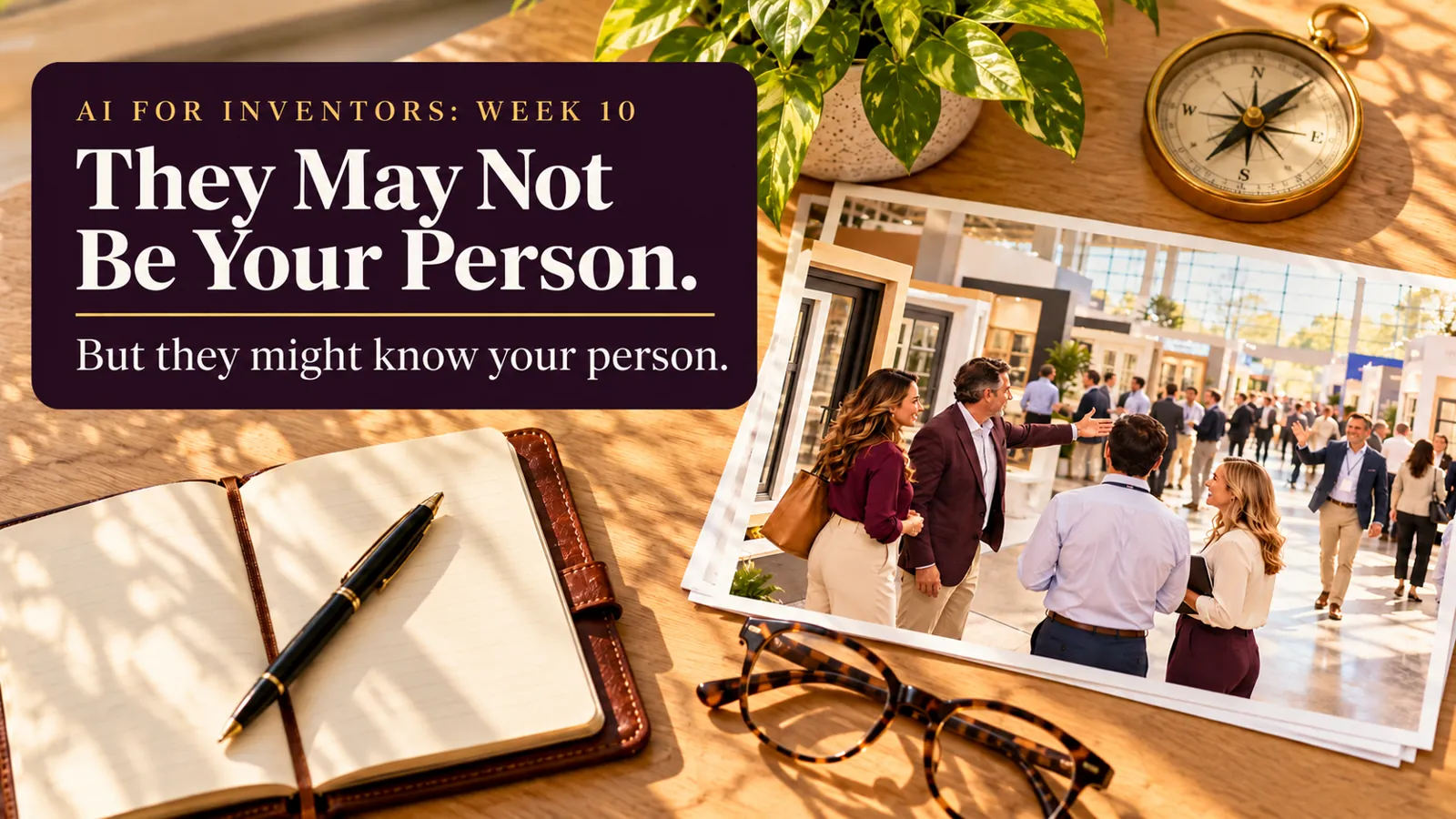
Last week, I attended GlassBuild America with the innovators behind the Smart Smoke Vent Frame.
We went to get the product in front of the industry, make connections, and explore potential paths to market.
We came home with a good problem to have.
Multiple companies were interested in Smart Smoke. But they were interested for different reasons, and from very different perspectives.
If you’ve ever wondered how to find the right company to license your product, this is one of the most overlooked answers: get in the room, and talk to people.
I want to walk you through what happened, what I learned, and how you can use the same approach whether you ever set foot in a convention center or not.
One Product, Many Paths to Market
When you’re trying to bring a new product to market, it’s easy to picture one path.
You find the right company. You pitch them. They say yes. You sign a license.
Real life rarely looks like that.
At GlassBuild, some conversations were about manufacturing. People wanted to understand how the frame was built and whether it could fit into existing production.
Other conversations went somewhere we didn’t expect. People saw applications we hadn’t fully explored, or partnerships that could open an entirely different route to market.
Same product. Completely different conversations depending on who was standing in front of us.
That’s not confusion. That’s information.
Every one of those perspectives told us something about where the innovation fits and who might value it most.
[INLINE IMAGE 1]
Alt text: One product viewed from manufacturing, application, partnership, and distribution perspectives
The Sentence Every Inventor Should Listen For
More than once, we heard some version of this:
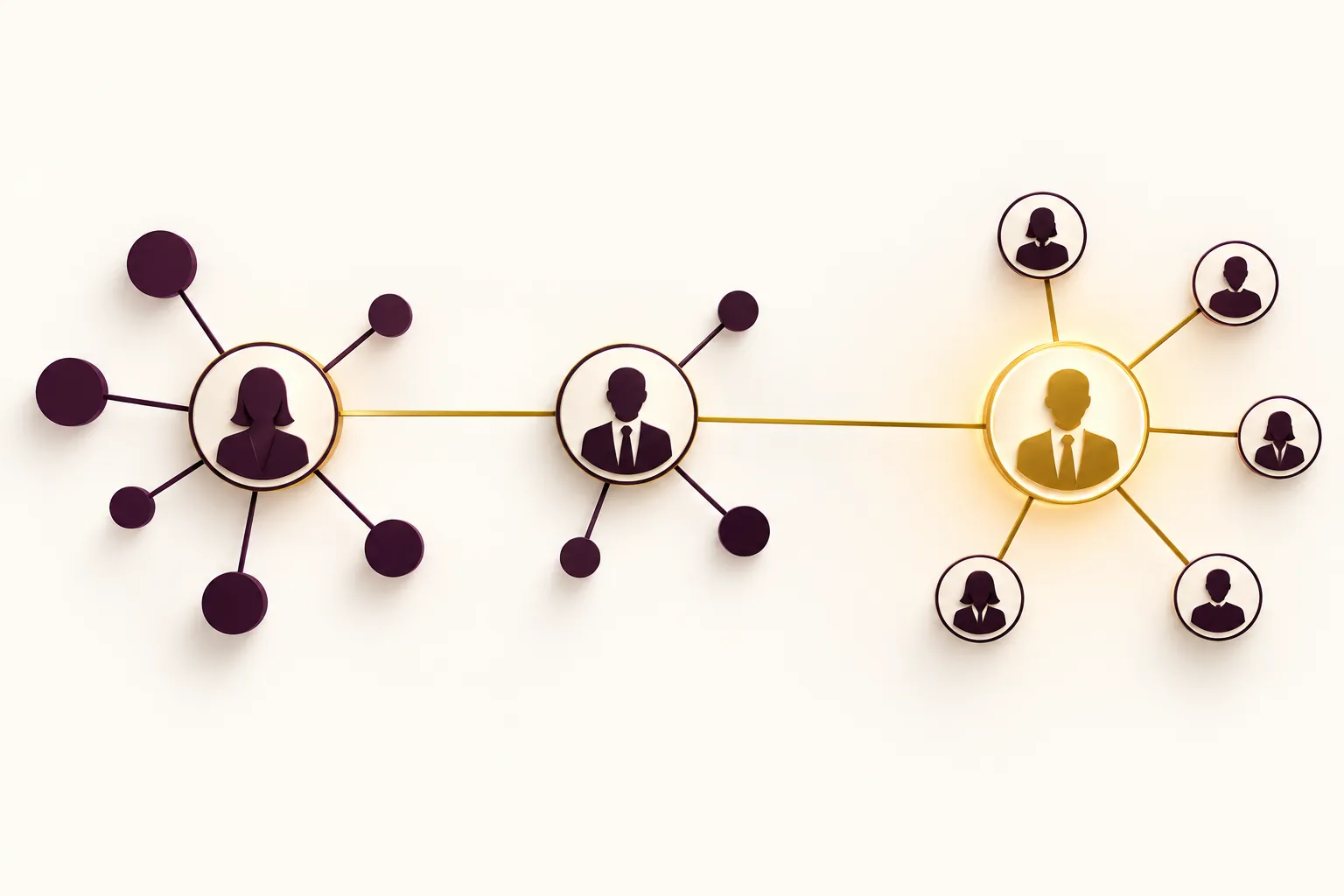
“This isn’t for us, but I know someone you should talk to.”
At first, it can sound like a polite no.
But it may be one of the most valuable things you can hear at a trade show.
Think about what that sentence actually means. Someone who knows the industry far better than a cold contact list just looked at your innovation and said, “I know who should see this.”
That’s not a rejection. That’s a map.
Trade Shows vs. Cold Outreach: What the Show Replaced
Had we not gone to GlassBuild, I would have been reaching out to these companies one at a time.
Researching each company. Finding the right contacts. Writing personalized emails. Sending LinkedIn requests. Following up. Waiting.
I do a lot of that work for my clients, and it matters. A thoughtful inventor outreach strategy still opens doors.
But it’s slow. And every single step depends on a stranger deciding to open your message and reply.
At GlassBuild, we had an entire industry in one building.
We could put the product in front of people and watch their reactions in real time. We could ask questions and get answers in seconds instead of weeks.
We could hear how a manufacturer sees the opportunity versus how a distributor sees it. We could learn which questions came up first and which features made people lean in.
And we made connections we might never have found sitting behind a computer.
A few days at a show can cover ground that would take months of outreach.
Trade Shows for Inventors: Why You Don’t Need a Booth
I hear the same concerns from inventors all the time.
“I’m not ready yet.”
“I don’t have a booth.”
“What if someone steals my idea?”
“I don’t know what to say.”
These are real concerns, and some of them deserve a real answer. Talk to your patent attorney about what’s safe to show and say publicly before you go.
But you don’t need a booth to benefit from a trade show. Some of the most valuable time is spent walking the floor, visiting exhibitors, and asking good questions.
You also don’t need a finished product. You need a clear explanation of the problem you solve and genuine curiosity about how the industry works.
The inventors who get the most out of a show aren’t always the ones with the best display. They’re the ones who came prepared to listen.
How to Tell Real Licensing Interest from Polite Interest
Here’s where inventors can get into trouble after a show.
You come home energized. Everyone was friendly. People took your card. Several people said “interesting.”
It feels like momentum.
But “interesting” is not a buying signal.
This is where I use the Buyer Signal Filter. After every show, I sort each conversation by what the person actually did, not how the conversation made me feel.
Did they ask about specs, cost, or timelines?
Did they ask for materials to be sent to a specific person?
Did they introduce us to someone with decision-making authority?
Did they ask what we were looking for in a partner?
Those are signals.
A warm smile, a compliment, and “keep me posted” are not.
Running every conversation through the Buyer Signal Filter turns a stack of business cards into a short, honest list of potential licensing partners. It also keeps you from spending months chasing someone who was just being polite.
Referrals and Warm Introductions: How to Follow Up
When someone says “talk to this person,” how you follow up matters.
A referral is not a cold contact. It’s a warm introduction, and it should be handled that way.
Write down who referred you, who they referred you to, and exactly what they said about why. Do it that same day, while the details are fresh.
When you reach out, lead with the connection. “Your name came up in a conversation with [person] at GlassBuild, and they thought you’d be the right person to see this.”
That one line changes how your message is received.
And close the loop with the person who referred you. Let them know you connected. People remember when you respect their introduction, and they’re more likely to make another one.
How to Use AI to Find the Right Companies at a Trade Show
This is Week 10 of my 12-week AI for Inventors series, so here’s exactly how I use AI before, during, and after a show.
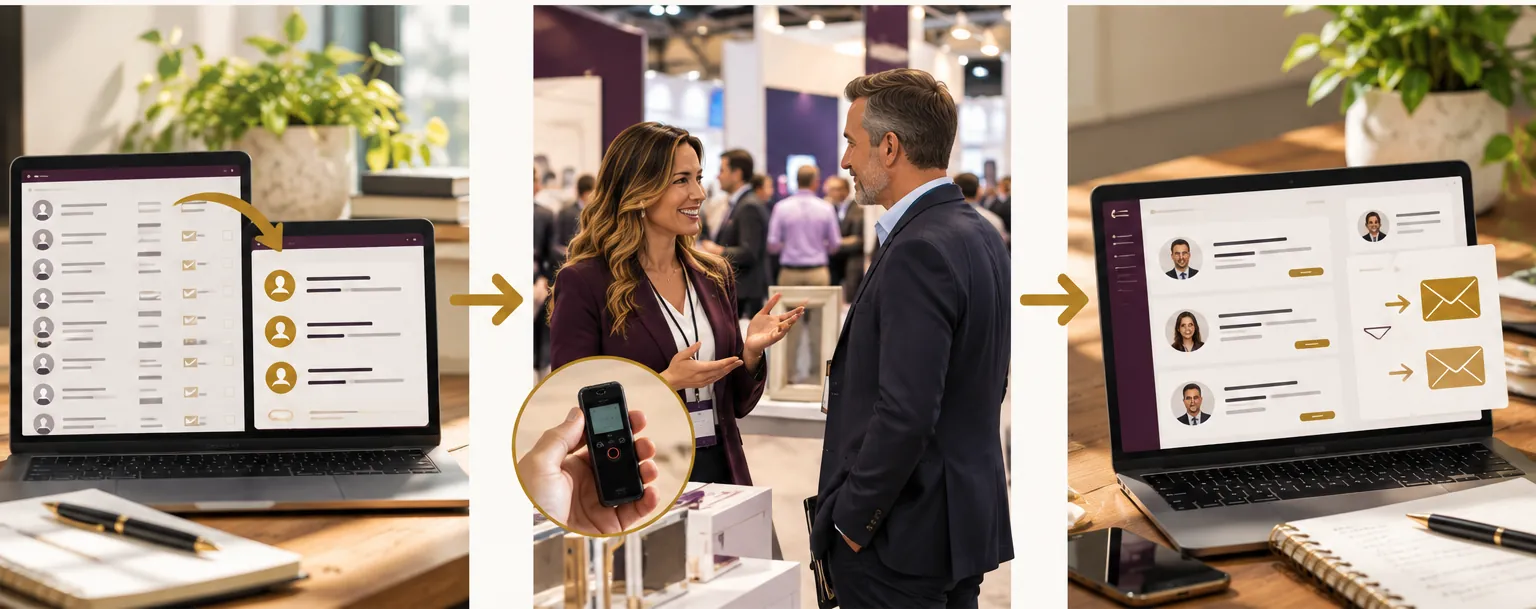
Before the show: build your shortlist. Give AI the exhibitor list and a clear description of your innovation, including the problem it solves. Ask it to identify which exhibitors have a specific commercial reason to care. A show with hundreds of booths can become a focused list of priority stops.
Before the show: research each priority booth. Use AI to learn what each company makes, what it has launched recently, and where your innovation might fit into their line. Always verify what it tells you. AI is a research assistant, not a source of truth.
Before the show: write one sharp question per company. Not a pitch. A question. Something like, “How are you handling [specific problem] in your current product line?” Good questions start better conversations than good pitches.
During the show: capture everything. After each conversation, take 60 seconds to record a voice note. Who you talked to, what they said, what they asked, and what you promised.
After the show: organize and sort. Paste or dictate your notes and ask AI to organize them by company, contact, what was discussed, and what was promised. Then run each conversation through the Buyer Signal Filter to decide where your time goes first.
After the show: draft personalized follow-ups. Use AI to draft a follow-up for each real lead, based on what that specific person said. Then edit every one yourself so it sounds like you.
The show gives you the conversations.
AI helps you prepare for them, and makes sure none of them get lost afterward.
Networking for Inventors: The Bigger Lesson
My biggest takeaway from GlassBuild goes well beyond trade shows.
Network.
See someone successful in your space? Reach out.
Ask them a question. See if they’ll give you five minutes. Learn how they did it.
When I took my own product through the licensing process, some of the most valuable guidance I got came from conversations, not courses. People who had already walked the path saw things I couldn’t see yet.
Most people are more generous than we expect, especially when the ask is small, specific, and respectful of their time.
How to Approach Companies and People Without Being Awkward
If reaching out to someone successful feels uncomfortable, keep it simple.
Be specific about why you’re contacting them. “I saw that you licensed a product in the home improvement space” is better than “I admire your work.”
Ask one question. Not ten. One.
Make it easy to say yes. “Would you be open to a 10-minute call sometime in the next few weeks?” is easier to accept than “Can I pick your brain?”
And make it easy to say no. People are far more likely to help when they don’t feel cornered.
If they say no or don’t reply, that’s fine. Move on to the next person without taking it personally.
From “Not a Fit” to a Referral
Be willing to talk to people who may not seem like the right connection at first.
At GlassBuild, a few conversations started with someone telling us the product wasn’t a fit for their company, and still ended with a name worth following up on.
They weren’t our person.
But they knew someone who might be.
The engineer who can’t license your product may know the product manager who can. The distributor who passes may know a manufacturer looking for exactly what you built.
When you’re looking for the right buyer for an invention, you’re not just looking for a buyer.
You’re looking for the path to the buyer.
Sometimes that path runs through someone who will never sign a deal with you.
Your Next Step
If you have an innovation and haven’t talked to anyone in your industry yet, pick one person this week.
A trade show exhibitor. A product manager on LinkedIn. Someone who has licensed a product in your space.
Ask one question. Just one.
Then listen closely to the answer, including the part where they tell you who else you should talk to.
Sometimes one conversation is all it takes to open the next door.
This is Week 10 of 12 in the AI for Inventors series.
Related reading
Ready for a structured score?
Take the free Validation Assessment. 15 questions, 5 minutes, instant clarity.
Get Your Validation Assessment (Free)